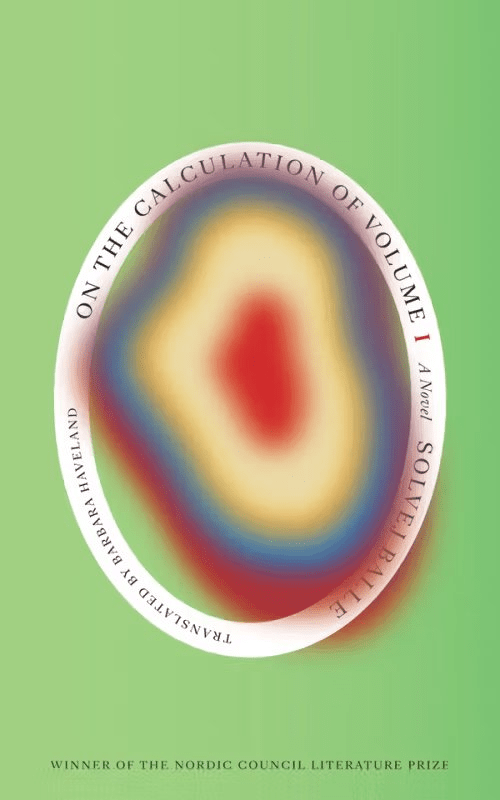
Tara Selter, the heroine of On the Calculation of Volume, has involuntarily stepped off the train of time: in her world, November 18th repeats itself endlessly. We meet Tara on her 122nd November 18th: she no longer experiences the changes of days, weeks, months, or seasons. She finds herself in a lonely new reality without being able to explain why: how is it that she wakes every morning into the same day, knowing to the exact second when the blackbird will burst into song and when the rain will begin? Will she ever be able to share her new life with her beloved and now chronically befuddled husband? And on top of her profound isolation and confusion, Tara takes in with pain how slight a difference she makes in the world. (As she puts it: “That’s how little the activities of one person matter on the 18th of November.”)
Balle is hypnotic and masterful in her remixing of the endless recursive day, creating curious little folds of time and foreshadowings: her memories of the past light up inside the text like old-fashioned flash bulbs.
The first volume’s gravitational pull—a force inverse to its constriction—has the effect of a strong tranquilizer, but a drug under which your powers of observation only grow sharper and more acute. Give in to the book’s logic (the thrilling shifts, the minute movements, the slant wit, the slowing of time), and its spell is utterly intoxicating.
Solvej Balle’s seven-volume novel wrings enthralling and magical new dimensions from time and its hapless, mortal subjects. As one Danish reviewer beautifully put it, Balle’s fiction consists of writing that listens: “Reading her is like being caressed by language itself.”
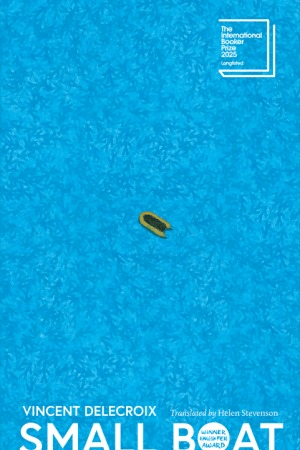
In November 2021, an inflatable dinghy carrying migrants from France to the United Kingdom capsized in the Channel causing the death of 27 people on board. Despite receiving numerous calls for help, the French authorities wrongly told the migrants they were in British waters and had to call the British authorities for help. By the time rescue vessels arrived on the scene, all but two of the migrants had died. The narrator of Delecroix’s fictional account of the events is the woman who took the calls. Accused of failing in her duty, she refuses to be held more responsible than others for this disaster. Why should she be more responsible than the sea, than the war, than the crises behind these tragedies?

In the distant future, humans are on the verge of extinction and have settled in small tribes across the planet under the observation and care of “Mothers.” Some children are made in factories, from cells of rabbits and dolphins; some live by getting nutrients from water and light, like plants. The survival of the race depends on the interbreeding of these and other alien beings–but it is far from certain that connection, love, reproduction, and evolution will persist among the inhabitants of this faltering new world.
Unfolding over fourteen interconnected episodes spanning geological eons, at once technical and pastoral, mournful and utopic, Under the Eye of the Big Bird presents an astonishing vision of the end of our species as we know it.

Millennial expat couple Anna and Tom are living the dream in Berlin, in a bright, affordable, plant-filled apartment. Their life as young digital creatives revolves around slow cooking, Danish furniture, sexual experimentation and the city’s twenty-four-hour party scene – an ideal existence shared by an entire generation and tantalizingly lived out on social media. But beyond the images, dissatisfaction and ennui burgeon. Work becomes repetitive. Friends move back home, have children, grow up. Frustrated that their progressive politics amount to little more in practice than boycotting Uber, tipping in cash, or never eating tuna, Anna and Tom make a fruitless attempt at political activism. Feeling increasingly trapped in their picture-perfect life, the couple takes ever more radical steps in the pursuit of an authenticity and a sense of purpose perennially beyond their grasp. Superbly translated by Sophie Hughes, Vincenzo Latronico’s Perfection is a taut, spare sociological novel about the emptiness of contemporary existence, scathing and brilliantly affecting.

In the twelve stories of Heart Lamp, Banu Mushtaq exquisitely captures the everyday lives of women and girls in Muslim communities in southern India. Published originally in the Kannada language between 1990 and 2023, praised for their dry and gentle humour, these portraits of family and community tensions testify to Mushtaq’s years as a journalist and lawyer, in which she tirelessly championed women’s rights and protested all forms of caste and religious oppression. Written in a style at once witty, vivid, colloquial, moving and excoriating, it’s in her characters – the sparky children, the audacious grandmothers, the buffoonish maulvis and thug brothers, the oft-hapless husbands, and the mothers above all, surviving their feelings at great cost – that Mushtaq emerges as an astonishing writer and observer of human nature, building disconcerting emotional heights out of a rich spoken style. Her opus has garnered both censure from conservative quarters as well India’s most prestigious literary awards; this is a collection sure to be read for years to come.
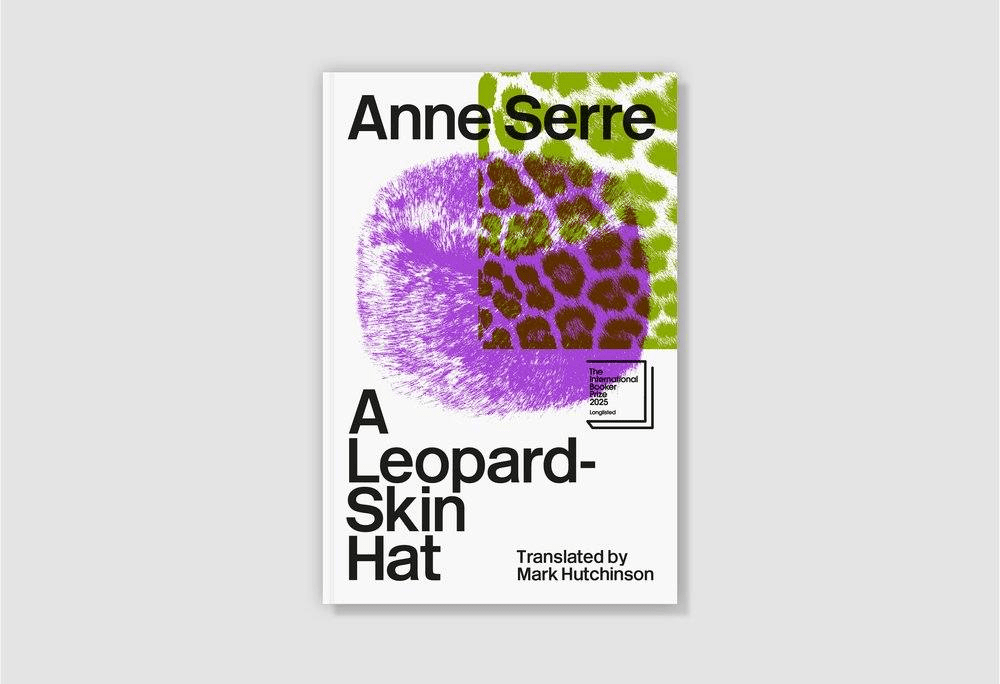
A series of short scenes paints the portrait of a strong-willed and tormented young woman battling many demons, and of the Narrator’s loving and anguished attachment to her. Serre poignantly depicts the bewildering back and forth between hope and despair involved in such a relationship, while playfully calling into question the very form of the novel. Written in the aftermath of the death of the author’s little sister, A Leopard-Skin Hat is both the celebration of a tragically foreshortened life and a valedictory farewell, written in Anne Serre’s signature style.
*
 Revista de Imprensa Literária